
Nov 19, 2026
Dual-axle mobile container house legal towing requirements
Legal towing requirements for dual-axle mobile container house units vary by state, unit classification and equipment. In the Australian, a mobile container home with two axles must adhere to federal width constraints, state height and length limits, and state regulations for brakes, lighting, registration and insurance. The tow vehicle must have ratings that cover the loaded weight and tongue weight as well. State and county rules vary, therefore I suggest checking each item with your state motor vehicle department and a competent compliance specialist before you buy. This guide goes over each inspection in the order most RV park operators see them.
Classification and Paperwork Before You Order
Paperwork decides whether a unit reaches the road at all, so I start here with every campground buyer.
How Authorities Classify a Towable Container Unit?
Classification determines which rules apply. A wheeled unit may be a trailer, recreational vehicle, park model, prefabricated house, or structure. NFPA 1192 Recreational Vehicles. Park type RVs are defined under ANSI A119.5 standards and limited to 400 square feet in set-up mode. An extendable device that doubles its footprint might, depending on the ultimate size, exceed that limit. TYGB said the device is treated as RV and mobile equipment in many places, but local regulators have the last word. Obtain a written statement of categorization from your county planning office.
Registration, Titles, and Import Documents
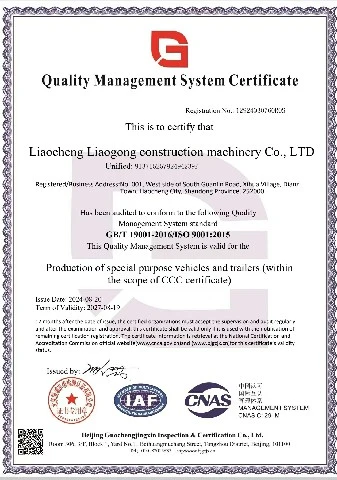
A road going trailer requires a VIN, a title and registration in the state where you base it. New trailers often feature a certification sticker including the VIN, gross vehicle weight rating and axle ratings. Your state generally requires a manufacturer's Under 49 Cdeclaration of origin as well. Ask TYGB early for the commercial invoice, packing list, certifications, test results. TYGB has ISO, SGS, ASTM and AU/NZS certifications. Check that list first since your state could still need separate trailer papers.
Insurance and Permit Questions for Park Operators
The categorization could be ambiguous to underwriters and insurance is often a stumbling block. Discuss with a broker before placing the order, and show the designs and the intended purpose. In ocean freight, towing and guest occupancy, ask about coverage. Permits depend on where the unit goes and where it lands. The road relocation may require an over-size permission . The camping location may need zoning, fire, water and sewage approvals. Road legality and site approval are two different stages and one does not substitute the other. Documented approval route for initial unit facilitates phased fleet purchasing.
S
ize, Weight, and Axle Load Limits
Once the paperwork path is clear, the next question is whether the unit fits the road and the truck.
Width, Height, and Length on Public Roads
Federal regulations, 23 CFR Part 658, restrict the national highway network to a width of 102 inches (8.5 feet) for a dual-axle mobile container house. States have their own height and length limitations and several allow 13 feet 6 inches height. TYGB describes the transit size as the dimensions of a typical container. A container-shaped body on a trailer deck is taller than a container on the ground. Measure height from pavement to top-most point, including vents and air conditioners. If any dimension is beyond the limit on your route, you'll require an oversize permit, and potentially escorts. Request written transport dimensions on final drawings.
Tare Weight, Payload, and Axle Ratings
Three most important metrics are tare weight, gross vehicle weight rating (GVWR) and rating of each axle. Once you add furnishings, water, appliances and other extras you desire, the final weight must still be below the GVWR. A unit may overload an axle even when it is within the overall rating if the weight is not uniformly distributed. A dual axle trailer chassis carries weight on two axles, which usually means larger capacity than one axle. Please inquire with TYGB engineers for the Tare weight and axle ratings for your precise design. Then, following delivery, weigh the actual numbers on a verified scale.
Tongue Weight and Towing Vehicle Match
Tongue weight is the force the trailer exerts downward on the hitch. A rule of thumb for bumper pull trailers is 10 to 15 percent of the trailer weight. Too little tongue weight might induce swaying. The rear axle of the tow vehicle may be overloaded. Refer to your owner's handbook for your vehicle's trailer weight rating, gross combined weight rating and hitch rating. SAE J2807 is a test standard several manufacturers utilize to determine these ratings. This unit may be pulled by a single vehicle, however that truck must be rated above your loaded weight. Include a safety buffer for hills, wind and lengthy gradients.
Brakes, Lights, Tires, and Hitch Safety
Weight figures only help if the chassis can stop and signal that weight safely. These items draw the closest attention from inspectors.
Braking and Breakaway Equipment
Most states need trailer brakes above a certain weight and that vary from state to state. Probably an equipped home on wheels will beat it. Tow vehicles often include electric brakes on both axles and a brake controller in the cab. Many states additionally require a breakaway switch (which deploys the trailer brakes if the connection breaks) and safety chains. Check with your motor vehicle agency for its particular weight limits. Then have TYGB confirm the brake type, number of axles and electrical connection on your order. Before the first lengthy drive, test the brakes yourself with your own tow vehicle.
Lighting and Reflectors
FMVSS No. 108 establishes lighting requirements for a dual-axle mobile container house, including tail, stop and turn lights, reflectors and marker lamps. Wide trailers also need clearance lighting. This unit is equipped with wheels and brake lights. It is recommended that you verify all lamps and reflectors are compliant. Check that the electrical connection matches your towing vehicle. Seven-way connectors are often used on trailers with electronic brakes. Before leaving the yard, have someone assist you to check the running lights, brake lights, and both turn signals. Make that check every time you link up.
Tires, Suspension, and Hitch Hardware
The tires bear the whole load and should be rated to the same capacity as the axle. Trailer tires are denoted “ST”. Check load range, inflation pressure and age. The DOT date code indicates the week and year of manufacturing. After maritime freight, check the springs, torsion axles, bearings, and lug nuts. Pick out a coupler and ball that are the same as the hitch class on your vehicle. Check safety chains and coupler lock each time you hitch. Taping a brief printed checklist inside the vehicle will make this procedure fast for your team.
Preparing the Unit for Transport and Shipping
Compliance continues after the order, from factory loading to the first tow on your own roads.
Locking Expandable Sections and Securing the Interior
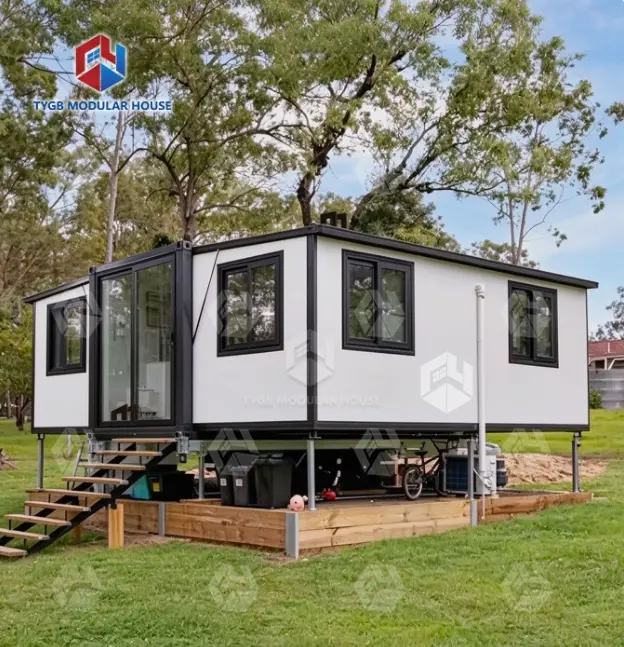
The hydraulic expansion, which doubles the floor space in around 30 minutes, is a site feature, not a travel feature. Do not tow with unit not completely retracted and all locking points locked. Secure unsecured furniture, appliances and cabinet doors. Drain water pipes and tanks to reduce weight and avoid frost damage. If your machine has batteries or gas cylinders, disconnect or secure them. Bring a written checklist and snap dated photographs for your records. TYGB has some graphical and video installation instructions that are a good start for your own travel checklist.
Ocean Freight and Port Handling
Most purchasers from abroad ship by sea. TYGB has self-operated import-export rights. Units are packed in ocean-grade shock-resistant packaging. The transport size is the same as conventional container dimensions, so your forwarder may plan with familiar equipment, but the forwarder should validate the container type from the final designs. Budget over the manufacturer pricing. Ocean freight, port costs, customs processing, import paperwork, inland delivery to your campsite and registration. TYGB says manufacturing time is 4-5 weeks depending on order amount. Plus shipping and registration time.
Inspection After Arrival
Ocean transportation adds vibration and humidity to a tiny house on wheels (THOW), so check the unit at the port or your yard before towing on public highways. Check tires, lug nut tightness, bearing oil, brakes, wiring, lights, coupler and structural frame. Take pictures of any damage and submit it to your carrier and insurance within the respective claim periods. TYGB provides installation advice via manuals, video and online engineers. It also has a 36-month guarantee on the main frame and 10 months on worn parts. A local trailer shop may do the inspection and sign a report that your state may need.
Matching a Dual-Axle Mobile Container House to Your Campground Plan
With the legal checks in place, you can judge how this product fits your park.
What the TYGB Unit Offers on the Road?
The TYGB dual-axle mobile container home is designed on a dual-axle trailer chassis with wheels and brake lights, may be pulled by one vehicle. It collapses to typical container size for shipment. Two personnel on site use the built-in hydraulic system to double the footprint in 30 minutes. Factory installed water supply and drainage, doors and windows, flooring and ceiling, bathroom and kitchen. No foundation needed therefore site work is minimal. The polyurethane insulation is designed for service temperatures from -40°C to 50°C. The unit has a Class A fire rating, and Level 8 ratings for wind and earthquake protection.
Dual-Axle Versus Single-Axle and Standard RVs
A double axle chassis will normally carry greater weight and track more stably than a single axle. Adds tires, brakes, and turning room. Single axle units are great for lighter units and narrow situations. A standard small home on wheels will have less floor space when set up than an expanding body, but the road shape will be container-sized. This condo has 2 bedrooms, 1 living room and 1 bathroom and is suitable for 4-6 people. All of these options will still need local clearance, so verify your county requirements for each plan.
Application Fit and Pre-Order Checklist
You may use it as a guesthouse, campground cabin, temporary workplace or holiday home. Each use has its own site regulations including fire, sanitation and accessibility inspection. I propose to create one file first before purchase. Include the county's classification letter, transport dimensions, tare weight, GVWR and axle ratings, brake and lighting information, tow vehicle ratings, certifications, import documentation, and your insurer's written input. Start with one unit and check the whole route by registration. Then slowly add units as your park expands.
Conclusion
Various related criteria determine whether a dual-axle mobile container house is legal to tow in the Australian. The classification of a trailer, RV, park model or building establishes the regulations for registration, insurance and site approval. The road is controlled by federal width and state height and length restrictions. The tow vehicle must be rated for the tongue weight, axle ratings and tare weight. Brakes, lights, tires and hitch hardware must conform to state and federal criteria and expandable portions must be secured before travel. Customs paperwork and an inspection after shipment are added for imported items. The issues of road legality and campsite permission are different; checking each with the competent authorities and recording the replies will help minimize the danger of purchasing a unit that cannot be registered or put.
FAQ
Q1: Can any pickup tow a dual-axle mobile container house?
A: Nope. Make that your truck's trailer weight rating, combined weight rating, and hitch rating are more than the loaded weight and tongue weight. Refer to the owner’s handbook and certification label on the equipment.
Q2: Does a mobile container house need a building permit?
A: This is contingent upon where you are. In many cases, a unit on wheels is classified as an RV or as mobile equipment. That’s a municipal determination. The campsite site may be subject to zoning, fire and sanitary regulations.
Q3: Do I need an oversize permit?
A: Maybe. States regulate height and length. Federal laws limit width to 102 inches on the national network. Compare final transport dimensions with your intended route.
Q4: Who handles registration after import?
A: You would register the trailer with your state’s motor vehicle bureau. Customs and NHTSA documentation is filed by the importer. TYGB may provide invoices, packing lists, certifications and test results.
Request a Dual-Axle Mobile Container House Quote from TYGB
Planning a campground fleet and looking for a dual-axle mobile container house manufacturer that understands towing paperwork? TYGB offers custom designs, AU/NZS, ASTM, ISO, and SGS certificates, and engineering review of your site and local code needs. Send your destination state, unit count, and floor plan to paulpan@tygbhouse.com.
References
1. Code of Federal Regulations, Title 49, Part 571, Standard No. 108: Lamps, Reflective Devices, and Associated Equipment, 2023
2. Code of Federal Regulations, Title 23, Part 658: Truck Size and Weight, Route Designations, Length, Width and Weight Limitations, 2023
3. Code of Federal Regulations, Title 49, Part 591: Importation of Vehicles and Equipment Subject to Federal Safety, Bumper, and Theft Prevention Standards, 2023
4. NFPA 1192: Standard on Recreational Vehicles, 2021
5. ANSI A119.5: Park Model Recreational Vehicle Standard, 2015
6. SAE J2807: Performance Requirements for Determining Tow-Vehicle Gross Combination Weight Rating and Trailer Weight Rating, 2016
Online Message