
Nov 5, 2026
How Fast Can a Backyard Expandable House Be Delivered and Set Up?
A backyard expandable house can be delivered and fully set up in as little as 4 to 6 weeks from order confirmation — far faster than traditional stick-built construction, which typically takes 6 to 12 months. At TYGB, production lead time runs 4 to 5 weeks depending on order volume and customization. Once the unit arrives on-site, the folding deployment mechanism allows a crew to complete physical setup in one to two days. For ADU developers and small-scale investors, this speed advantage directly translates to faster rental income and reduced carrying costs.
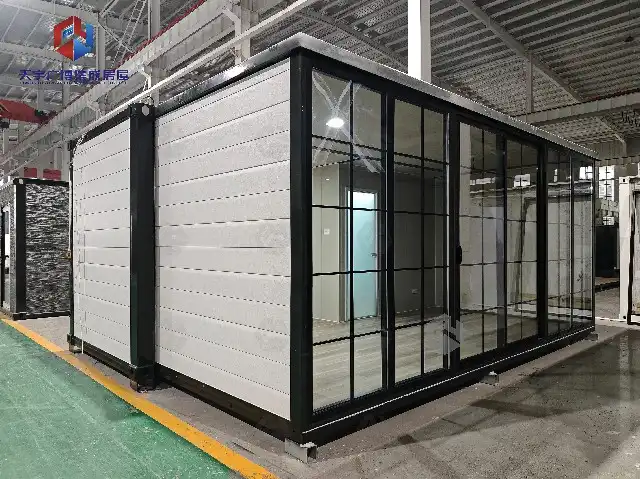
Understanding the Delivery and Setup Timeline of Backyard Expandable Houses
Not every prefab backyard unit works the same way. The type you choose — DIY flat-pack, modular panel system, or factory-finished expandable unit — shapes the entire project timeline.
Three Main Types and Their Speed Profiles
DIY flat-pack kits ship quickly but require significant on-site assembly labor, often adding two to four weeks of installation time. Modular panel systems offer a middle ground: panels arrive pre-cut, and a skilled crew can assemble them in three to five days. Factory-finished expandable units like TYGB's backyard expandable house arrive nearly complete, folding open from shipping container dimensions to full living space within hours. The "logistics-volume ratio" advantage means one 40ft high-cube container can carry a unit that expands to two to three times its transport size.
Typical Production and Shipping Schedule
TYGB's standard production window is 4 to 5 weeks. Ocean freight from China to the U.S. West Coast averages 14 to 18 days; East Coast routes add another 5 to 7 days. Buyers in California or Texas can realistically expect total delivery in 6 to 8 weeks from contract signing, assuming permits are already in progress. Australia (Sydney/Melbourne) follows a similar window, typically 7 to 9 weeks door-to-site.
Step-by-Step Setup Process
Site preparation is the first physical task: pouring a concrete slab or installing screw piles at 12 to 16 support points under the main chassis. Once the unit is craned or forklift-positioned onto the foundation, the folding wings are extended manually or with hydraulic assist and locked. Utility connections — pre-wired electrical panels, plumbed fixtures — are then tied into the site supply. With a turnkey contract, a crew of three to four workers typically completes the full process in one to two days.
Key Factors Influencing Delivery and Setup Speed
Speed is not just about manufacturing. Several variables intersect to determine when a unit is truly move-in ready.
Manufacturing Lead Time and Material Availability
TYGB runs two automated production lines with CNC forming and bending machines, keeping lead times predictable. The structural frame uses hot-dipped galvanized Q235B steel, which is readily available in standard inventory. Customizations — such as wood-grain cladding, matte white, or black-trim finishes — may add three to five business days to the production schedule but do not typically push beyond the 5-week window.
Permitting and Zoning Approvals
In California, ADU permit approvals under SB 9 and AB 2221 now carry a mandatory 60-day review clock for local agencies. Texas has fewer zoning restrictions, but HOA covenants and utility connection permits still require early action. Buyers who submit permit applications concurrently with production orders effectively eliminate waiting time between delivery and installation. TYGB provides English-language compliance documents and test reports (ASTM, UL, SAA) to support local permit applications.
Site Conditions and Infrastructure Readiness
A flat, accessible backyard shortens setup time considerably for a backyard expandable house. Sites requiring ground grading, retaining walls, or utility trenching add one to three weeks before the unit can be placed. Narrow access points that prevent crane or forklift entry require manual staging, which extends the on-site work. Confirming site measurements and access routes before placing an order is one of the most effective ways to prevent schedule delays.
Comparing Delivery and Setup Speeds: Expandable Houses vs. Alternative Solutions
Procurement teams can make faster, more sure decisions when they know how expandable units compare to other options.
Here is a direct comparison of the most common ways to build a home in the backyard:
- Traditional stick-built guest house: 6 to 12 months from permit to occupancy. High material and labor costs. Not relocatable.
- Standard prefab/modular home: 10 to 16 weeks from order to occupancy, including on-site panel assembly. Heavier foundation requirements.
- Shed conversion: Low upfront cost but rarely meets residential code for habitation. Permitting is often rejected for ADU use.
- TYGB backyard expandable house: 6 to 9 weeks from order to move-in, with pre-installed plumbing, electrical, kitchen, and bathroom. Folded for shipping, no flat-rack container required.
There is a clear gap shown by these numbers. For ADU builders who sell five to thirty units a year, cutting eight to twenty weeks off of each project cycle has a real effect on how much money they make each year. The expandable style also ships for a lot less money over the ocean than fully built modular units, which need open-top or flat-rack carriers.
How to Expedite Delivery and Setup for Efficient Procurement?
Process discipline, not short-cuts, is what makes things go faster. The most common points of delay are taken care of when you work with a manufacturer that owns the whole production chain.
Vet Your Supplier's Production Capacity Early
Ask the provider directly: Does the company have its own production lines or do they hire other companies to do the work? TYGB has its own workshop for welding, a workshop for painting and spraying, and two automatic lines. This means that delays caused by outside parties don't affect production plans for a backyard expandable house order. Before you place an order, ask for a video tour of the factory or set up a virtual walkthrough via video conference.
Submit Permits Before Production Ends
Most of the time, buyers make the mistake of waiting for real arrival before starting permit work. In California, review time can be cut down to as little as 30 days with a standard ADU plan set that has already been approved. TYGB provides installation guides in multiple languages, certified test reports (ISO, CE, ASTM, SAA/Watermark), and structural drawings to help local authorities with their applications. Starting this process on the first day of production cuts the time needed to get a permit down to zero.
Use Integrated Logistics and Turnkey Contracts
TYGB has the exclusive right to import and export goods and offers ocean-grade, shock-resistant packaging with full lists of accessories and certificates. A turnkey installation contract, in which the supplier arranges for delivery, the scheduling of the crane, and help with connecting utilities, makes it easier for trades to work together. Video tutorials and live online engineer support are available to help with remote installation.
Case Studies: Fast-Tracked ADU Installations
Real projects show what this timeline looks like in practice.
California ADU Developer: 7-Week Order-to-Occupancy
A small development firm in Sacramento ordered three units with gray-white trim finishes. Production ran 4.5 weeks. A permit pre-approval for a standard ADU floor plan was already in place. Delivery took 16 days. On-site setup — screw pile foundation, unit placement, utility tie-in — was completed in 36 hours. The first tenant moved in 49 days after contract signing.
Texas Investment Property: Batch Order Efficiency
An investor in Houston placed an initial order of five units across two exterior styles. TYGB batched production, cutting per-unit lead time to under 4 weeks by the second batch. The investor submitted permit applications using TYGB's English compliance documentation and received approvals within 45 days. The project scaled to 12 units within the first year, with reorder cycles averaging 5 to 6 weeks.
Conclusion
The backyard expandable house design has been shown to help build an ADU more quickly. With factory production taking 4 to 5 weeks, ocean freight taking 14 to 18 days, and setup on-site taking 1 to 2 days, the time it takes to go from order to occupancy is a realistic 6 to 9 weeks, as long as permits and site preparation go smoothly at the same time. Buyers don't have to choose between speed and quality because the building has a Class A fire rating, pre-installed fixtures, and structural performance ratings (Grade 11 wind resistance, Grade 9 seismic resistance). For builders who sell five or more units a year or more, this model changes what they can afford to do each year.
FAQ
How long does it take to set up a backyard expandable house on-site?
Physical deployment — placing the unit on a prepared foundation and extending the folding wings — typically takes 4 to 8 hours. Full utility connection (electrical and plumbing tie-in) adds another 4 to 8 hours. A crew of three to four workers can complete everything in one to two working days.
What foundation do I need before the unit arrives?
A concrete slab or strip foundation is the standard recommendation. For sites where a full slab is not practical, industrial screw piles or concrete pier blocks at 12 to 16 points beneath the main chassis are accepted alternatives. Site preparation should begin as soon as production starts.
Can I get compliance documents for a U.S. or Australian ADU permit?
Yes. TYGB supplies structural drawings, ASTM, UL, and SAA/Watermark test reports, and English-language installation manuals. These documents are accepted by most local planning authorities for ADU permit submissions in California, Texas, and Australian states.
What causes the most delays in delivery and installation?
Permit approvals and site preparation are the two most common delay sources. Manufacturing and shipping timelines are predictable. Starting permit applications on the day of order placement and completing site grading before delivery eliminates most schedule risk.
Is the unit truly move-in ready on arrival?
TYGB units arrive with pre-wired electrical panels, pre-plumbed bathroom and kitchen fixtures, double-glazed windows, and finished interior surfaces. The only on-site work required is foundation placement and utility connection.
Request a Quote from TYGB — Backyard Expandable House Supplier
In North America and Australia, TYGB sells factory-certified backyard expandable houses with a Class A fire rating and all the necessary paperwork for compliance. The production lead time is 4 to 5 weeks. As a reliable company that builds backyard expandable homes with self-operated export rights and two automated production lines, we help ADU developers from the time they first ask for help until the house is installed. You can get a price, download specs, or set up a virtual plant tour by emailing paulpan@tygbhouse.com.
References
1. California Department of Housing and Community Development. Accessory Dwelling Units: A Homeowner's Guide to ADUs in California. 2023.
2. National Association of Home Builders (NAHB). Modular and Prefabricated Housing: Construction Trends and Cost Analysis. 2022.
3. Urban Land Institute. Missing Middle Housing: Thinking Big and Building Small to Respond to Today's Housing Crisis. 2022.
4. Australian Building Codes Board (ABCB). National Construction Code Volume One — Housing Provisions. 2022.
5. Terner Center for Housing Innovation, UC Berkeley. ADU Policy and Permitting in California: Progress and Remaining Barriers. 2023.
6. Journal of Building Engineering. Thermal and Structural Performance of Sandwich Panel Systems in Prefabricated Modular Housing. Elsevier, 2021.
Online Message